Field notesPayday Super, in plain English
What Payday Super means for your practice
Short, practical briefings for Australian accountants and CPAs on the 7-business-day rule, the closure of the Small Business Super Clearing House, and how to turn a new compliance obligation into a recurring revenue line.
- 5 min read
A Payday Super compliance checklist for bookkeepers
A practical, bookkeeper-focused checklist to get clients ready for Payday Super and stay compliant: pay cycles, post-SBSCH routes, business-day deadlines, fund details, alerts, and escalation.
Read briefing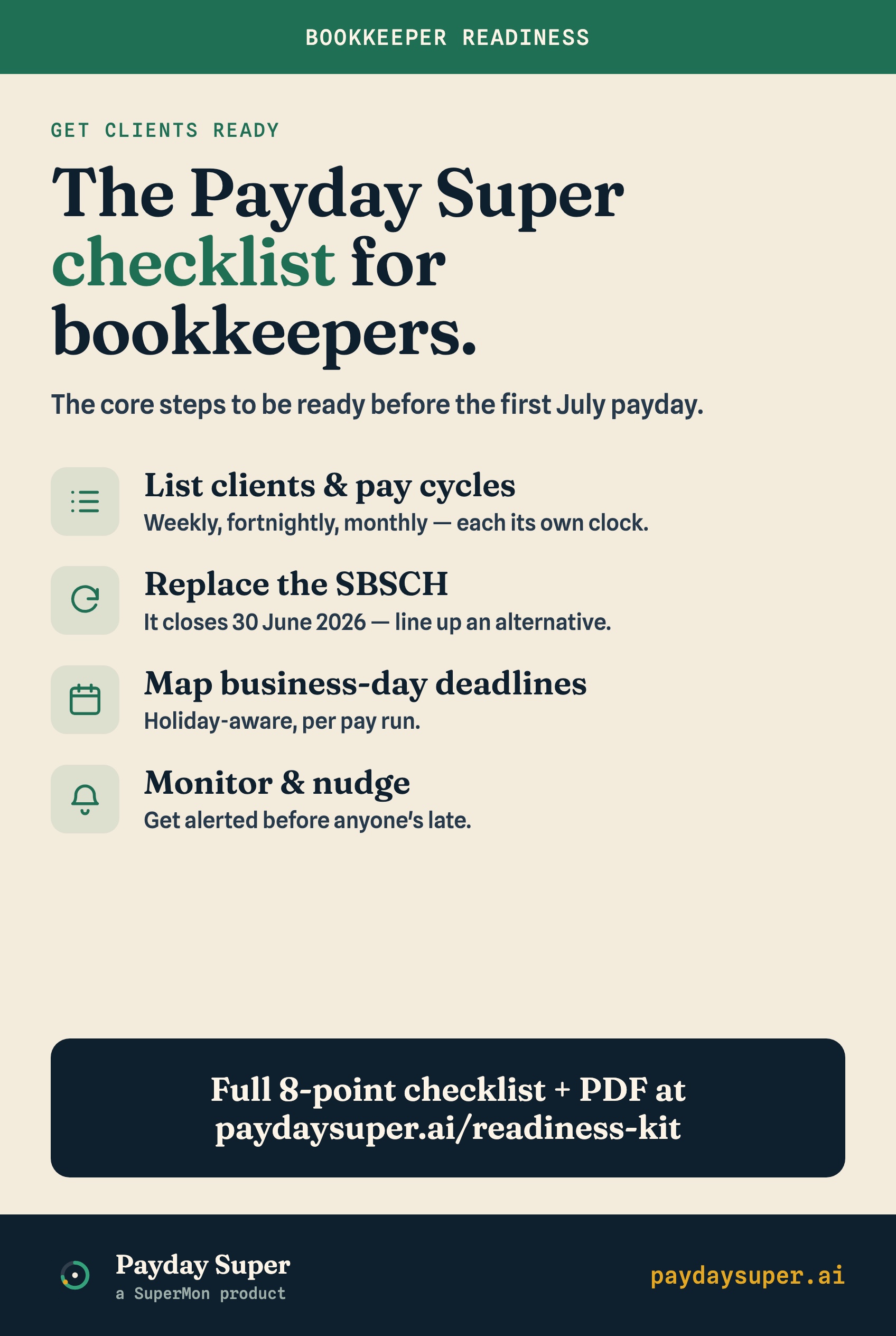
- 5 min read
Single Touch Payroll and Payday Super: how STP drives the 7-day clock
Under Payday Super, every STP-reported pay event effectively starts a 7-business-day super clock. Here's how STP gives the ATO near-real-time visibility and why quarterly thinking no longer works.
Read briefing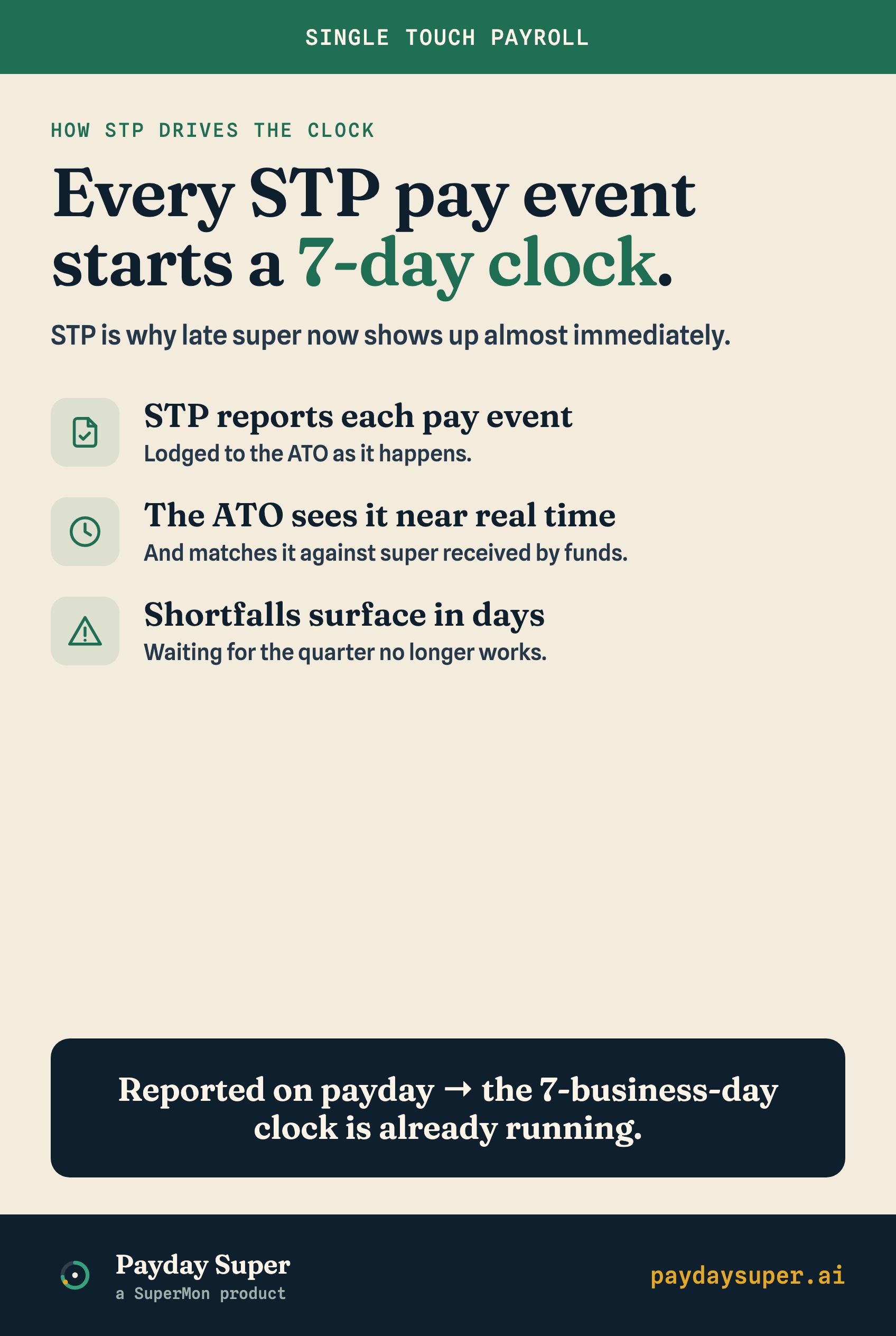
- 5 min read
PCG 2026/1 explained: the ATO's first-year Payday Super leniency
PCG 2026/1 sets the ATO's supportive first-year approach to Payday Super. Here's what it actually does, what it does NOT do, who it's for, and what your practice should document to show genuine compliance effort.
Read briefing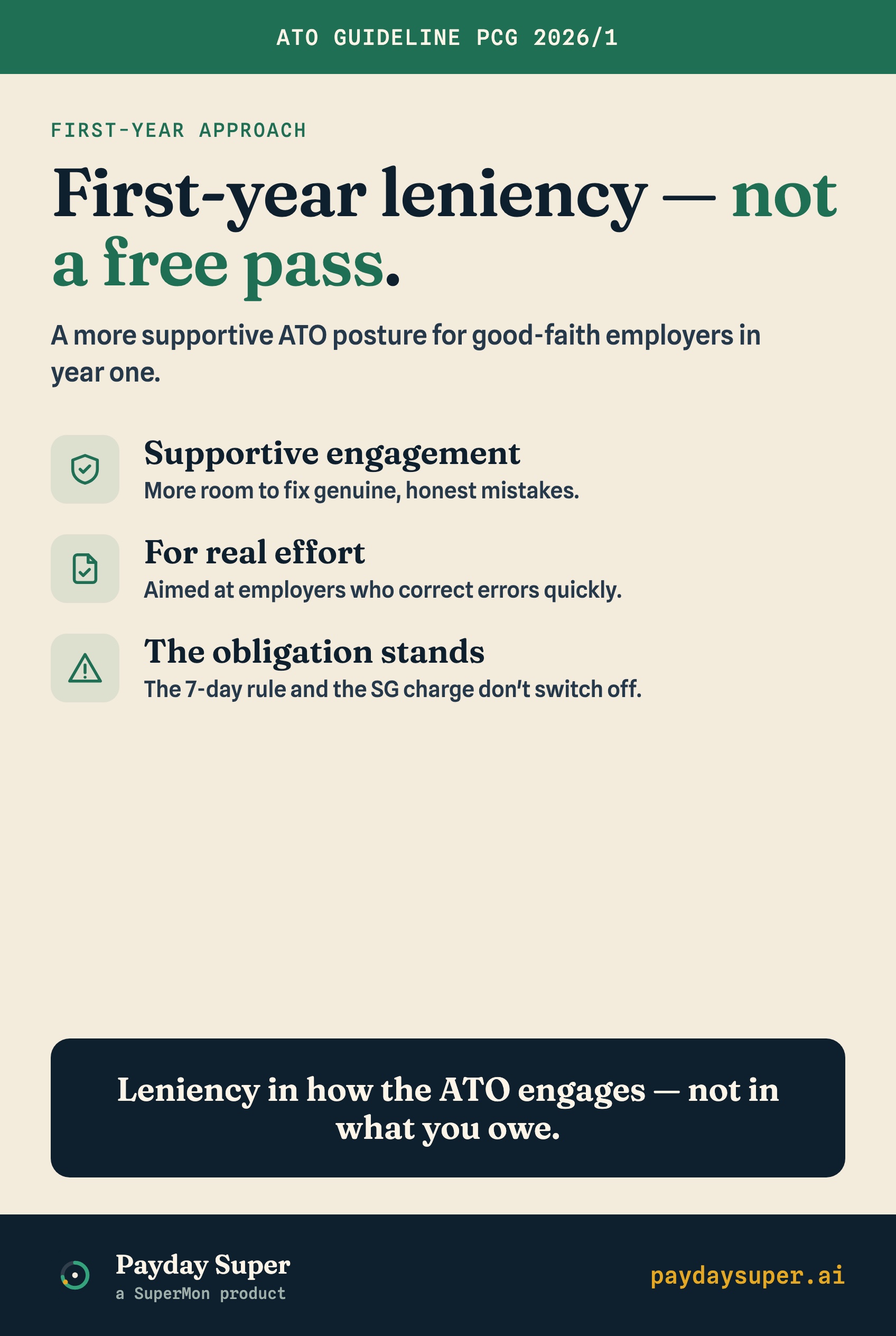
- 6 min read
The Super Guarantee Charge under Payday Super — and how to avoid it
The Super Guarantee Charge (SGC) is what you pay when super is late. Under Payday Super it can trigger far more often. Here's what the SGC is, why it can cost more than the super you owed, and how to avoid it.
Read briefing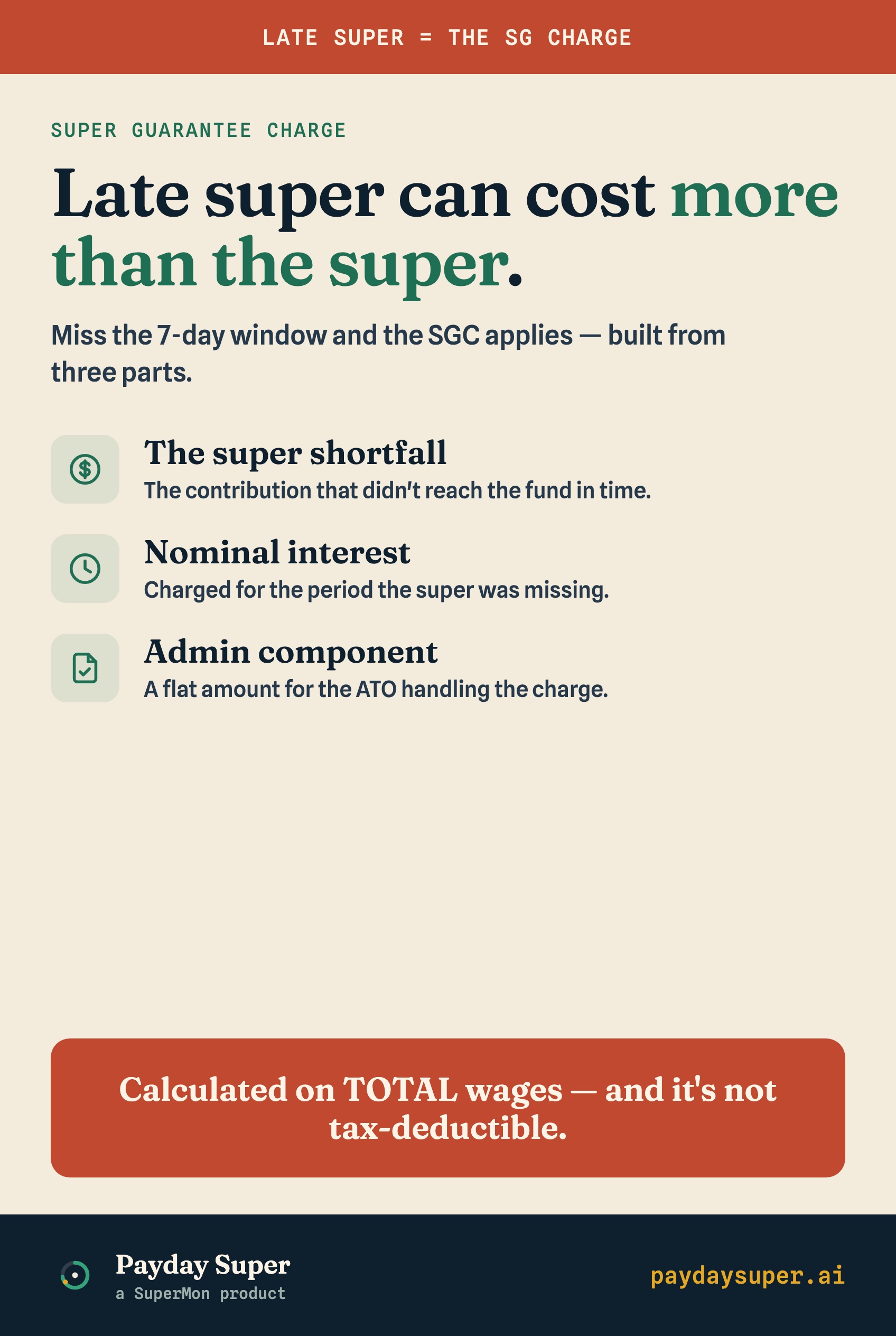
- 4 min read
How accountants can turn Payday Super into a recurring revenue line
Payday Super creates a continuous monitoring obligation on every client. Here's how accounting practices package that work as a productised, recurring-revenue service — with pricing examples.
Read briefing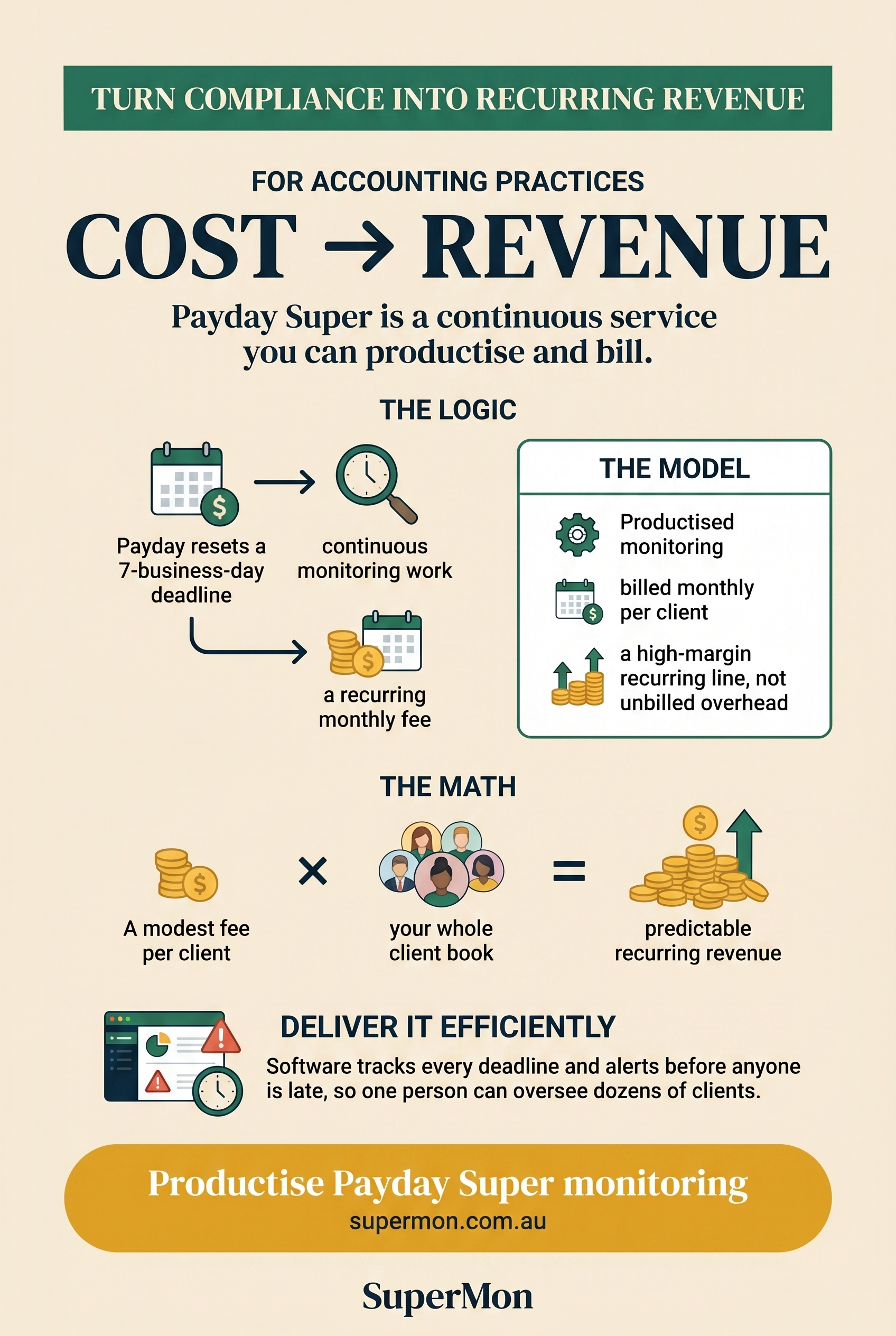
- 6 min read
Payday Super for Xero users: how to track every client's deadline
Xero runs the pay run, but it doesn't track the 7-business-day super deadline for you. Here's how Xero pay runs map to the Payday Super clock, the manual method, and why it breaks across many clients.
Read briefing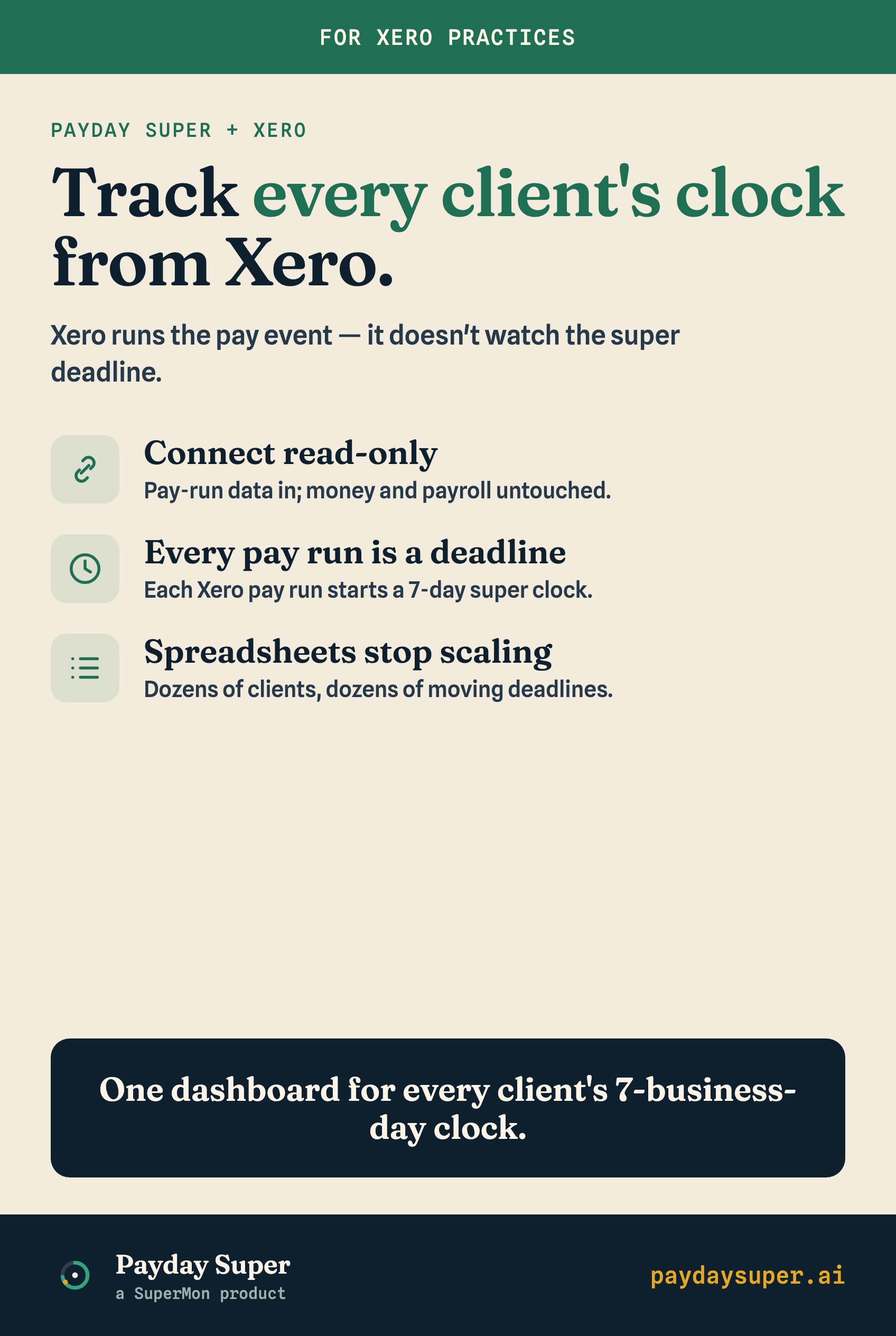
- 4 min read
The SBSCH closes 30 June 2026: how to migrate your clients in time
The Small Business Super Clearing House shuts on 30 June 2026, the day before Payday Super begins. Here's who's affected, the migration options, and a step-by-step plan for accounting practices.
Read briefing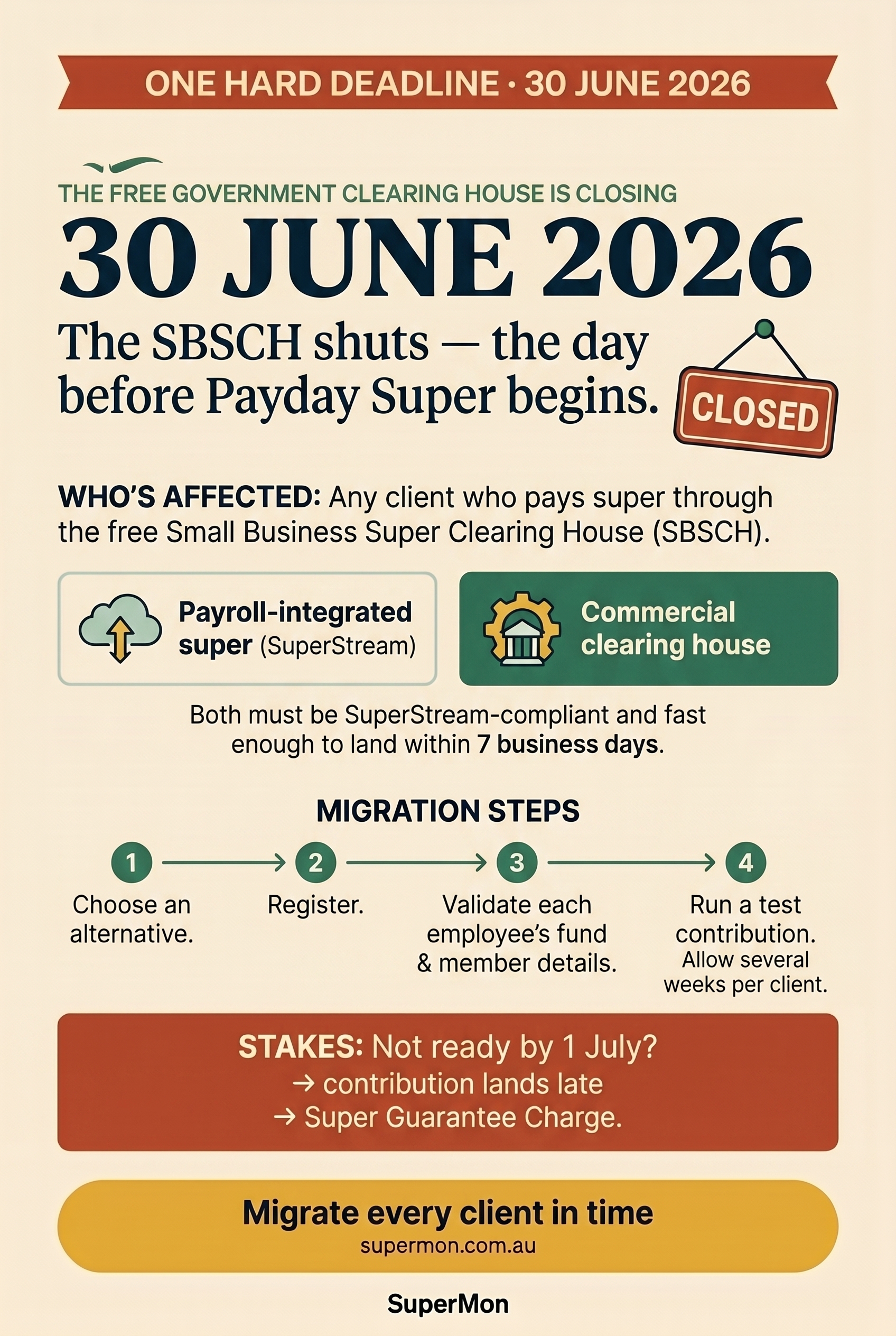
- 5 min read
How the 7 business days are counted under Payday Super
Payday Super gives you 7 business days to get super into the fund. Here's exactly how to count them — weekends and public holidays excluded, received not sent, with a worked example across a public holiday.
Read briefing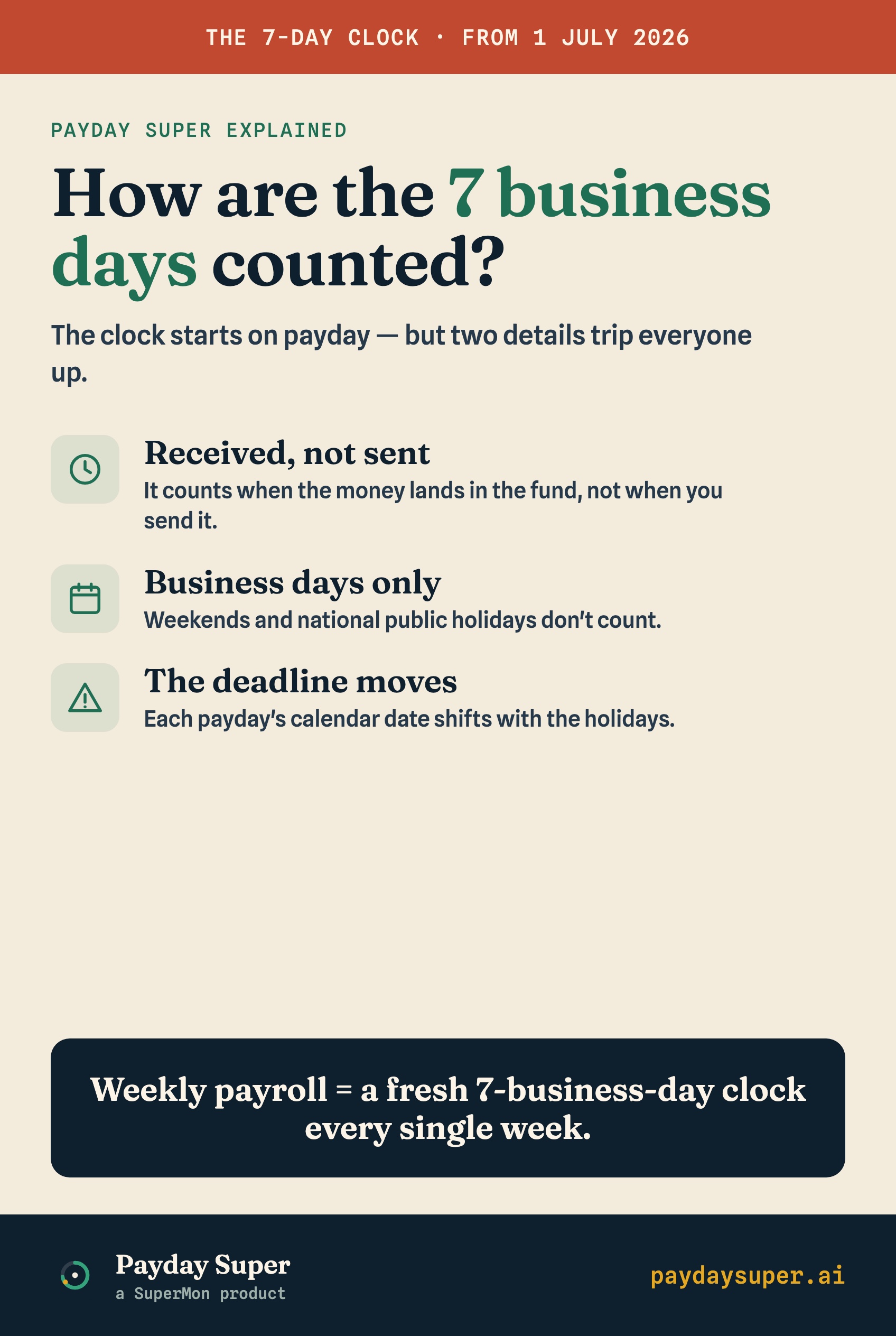
- 5 min read
How accounting practices are pricing Payday Super monitoring as a service
Payday Super is a new recurring client obligation with real downside risk. Here's how practices price monitoring — per-client, tiered, or bundled — with a worked margin example.
Read briefing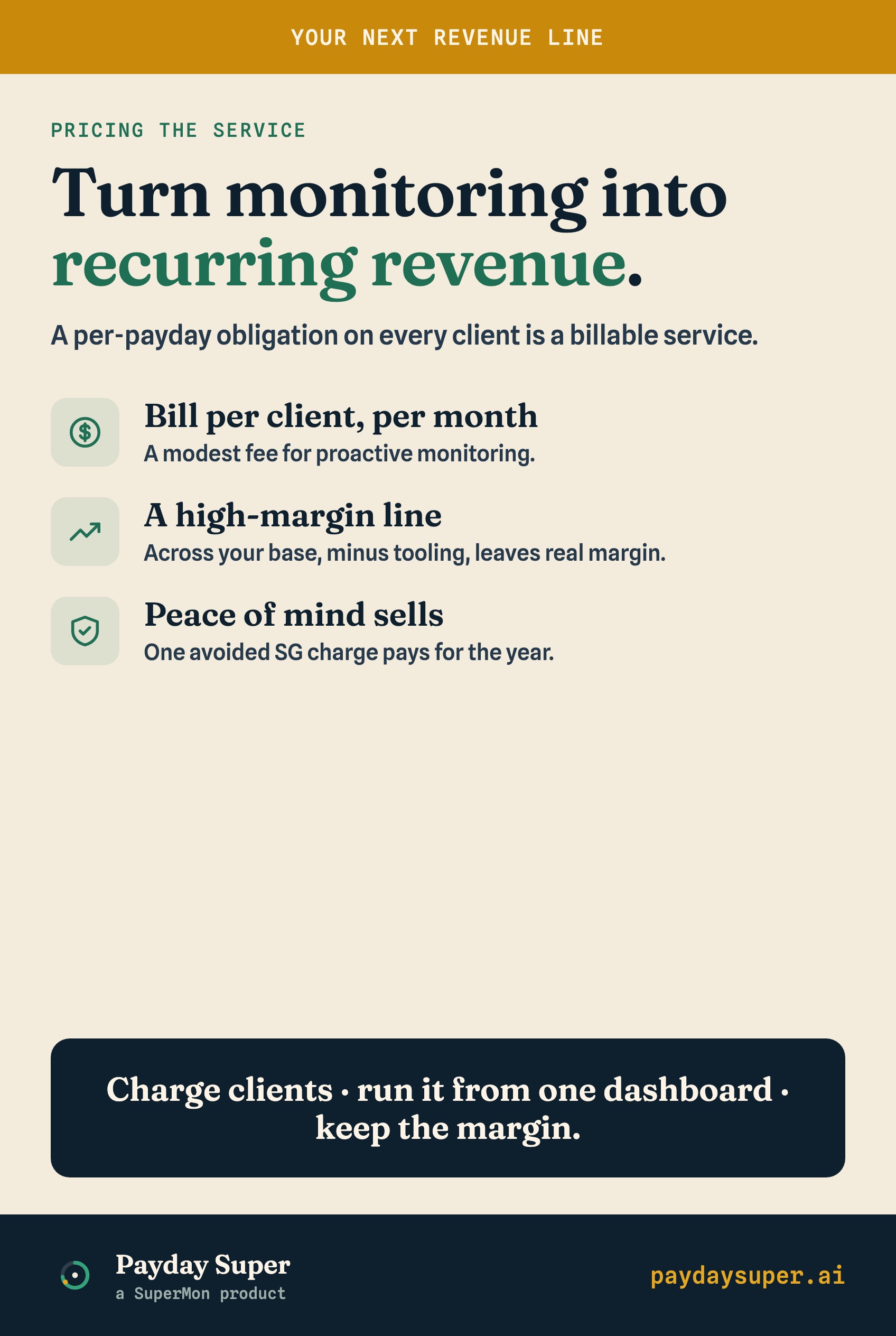
- 5 min read
Payday Super vs quarterly super: what changes on 1 July 2026
Quarterly super ends and Payday Super begins for wages paid from 1 July 2026. Side-by-side comparison of deadlines, frequency, day-counting, shortfall visibility, the rate, and the changeover period.
Read briefing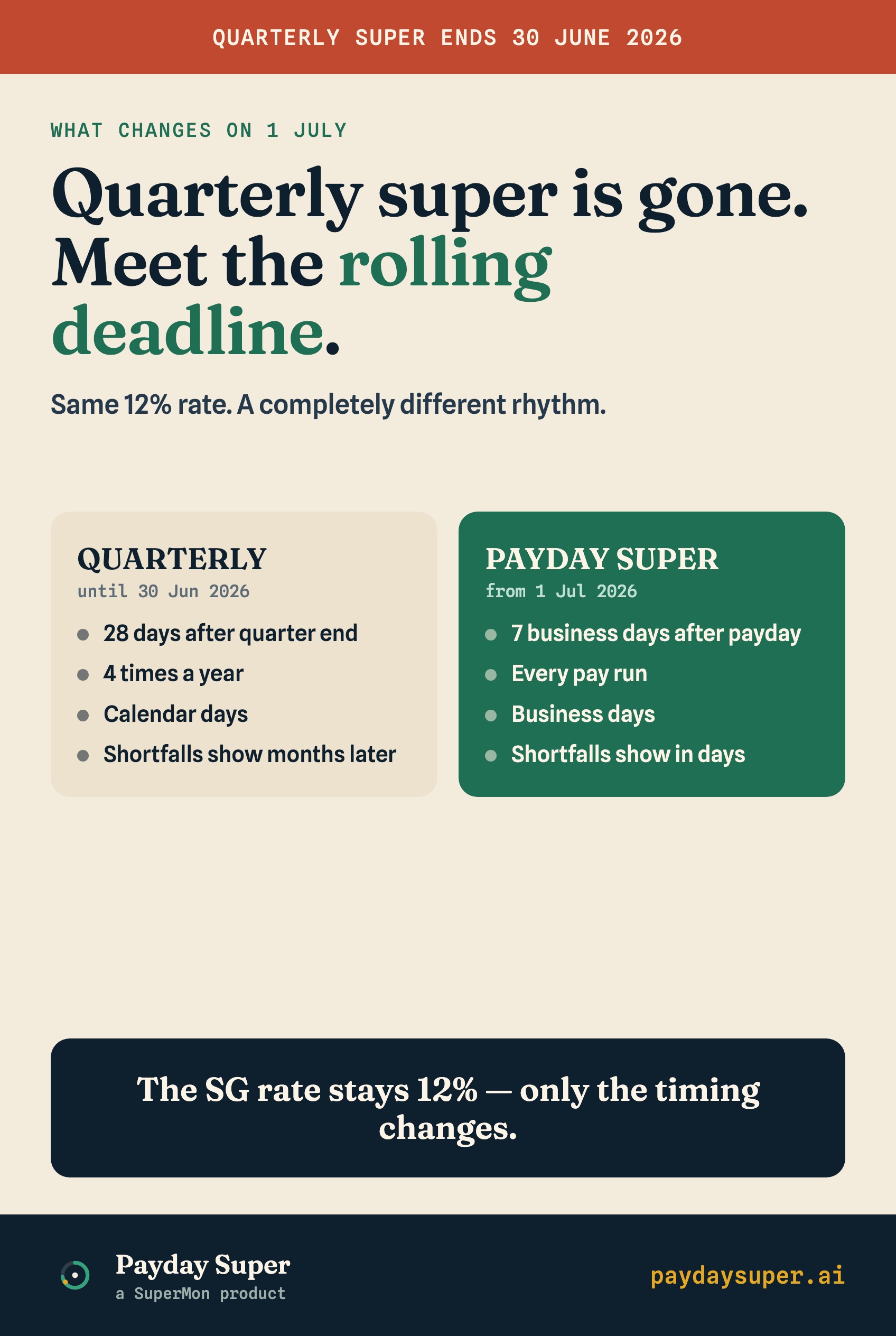
- 4 min read
Payday Super 2026: what Australian employers must do from 1 July
From 1 July 2026, Australian employers must pay super within 7 business days of each payday. Here's the 7-day rule, the deadlines, the penalties, and a pre-1-July checklist.
Read briefing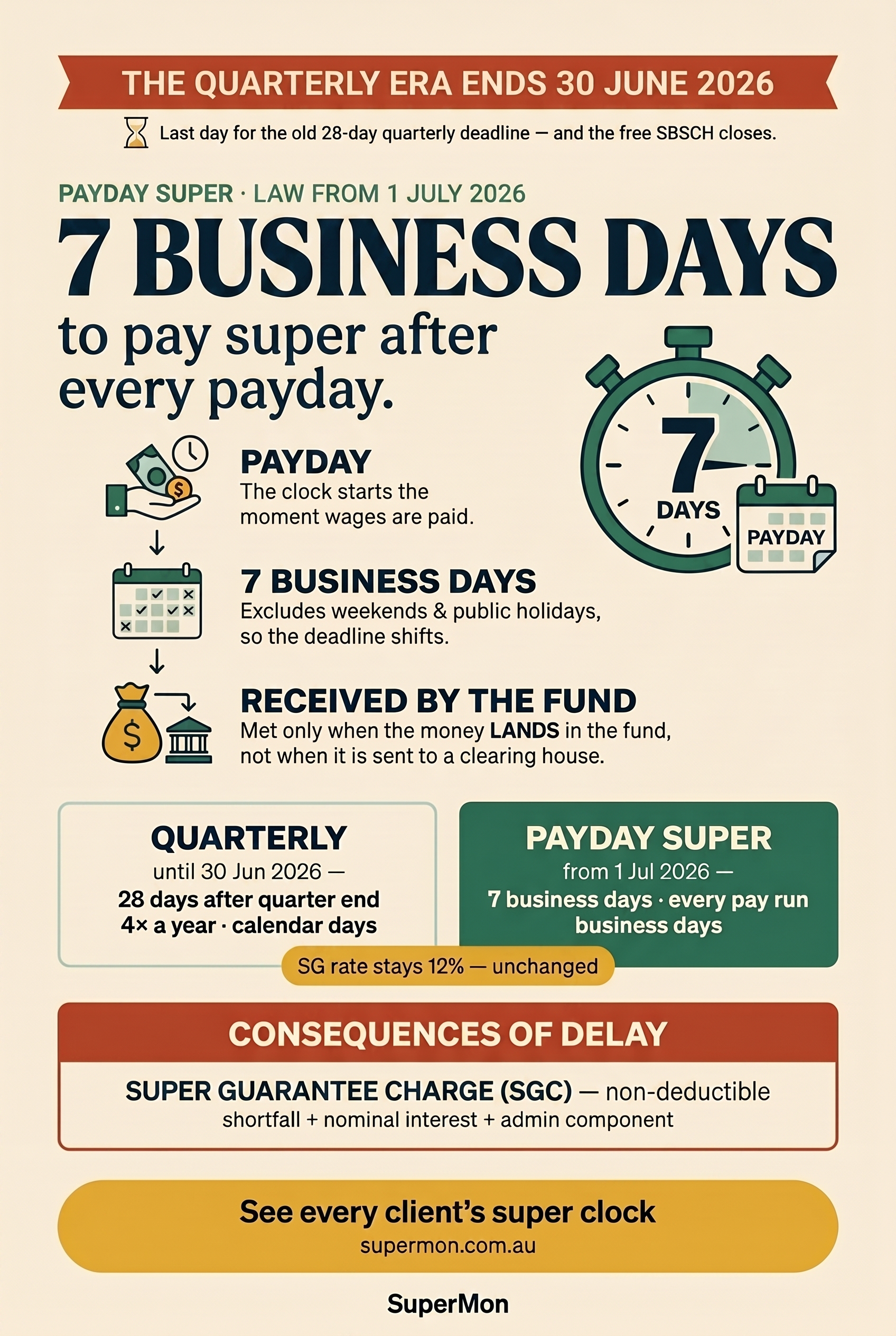
Watch every client's 7-day clock from one dashboard
SuperMon connects to Xero with read-only access and alerts you before any client's Payday Super deadline slips. Now live.
Get started